Tuesday, 22 March 2022

Top Recent Development in Foam Plastics Market


Foam plastics are resins used in manufacturing polymer foams, which are used in various end-use industries such as building & construction, furniture & bedding, packaging, and automotive among others. The foam plastics market is projected to grow from USD 51.6 billion in 2020 to USD 65.4 billion by 2025, at a CAGR of 4.8% between 2020 and 2025. APAC is the largest consumer of foam plastics. The overall growth of the market is triggered by the growth of major end-use industries of foam plastics and energy sustainability and energy conservation properties of foam plastics.

To know about the assumptions considered for the study download the pdf brochure

Recent Developments

  • In March 2019, BASF enhanced its regional innovation capabilities with new facilities at the Innovation Campus Shanghai to further strengthen collaboration with the automotive industry and to offer new process catalysts to the chemical industry. With an investment of approximately USD 38.0 million, the new 5,000-square-meter facility includes the Automotive Application Center and the Process Catalysis Research & Development (R&D) Center. One of the innovations includes polyurethane (PU) integral foam solutions with an open cell structure offering unique performance, which are light-weight and have excellent sound insulation and flame resistance.
  • In February 2020, Huntsman Corporation announced that it completed the acquisition of Icynene-Lapolla, a leading North American manufacturer and distributor of spray polyurethane foam (SPF) insulation systems for residential and commercial applications. Huntsman acquired the business from an affiliate of FFL Partners, LLC, for USD 350 million, subject to customary closing adjustments, in an all-cash transaction funded from available liquidity.
APAC is the largest foam plastics market, globally.

APAC is the leading market for foam plastics. The growth in the region is fueled by the booming economies of China, India, Indonesia, and Vietnam. PU resin based foams are the preferred choice in the building & construction industry in APAC. It is in high demand, as it is a low-cost material that provides low heat conduction coefficient, low density, low water absorption, relatively good mechanical strength, and good insulating properties. APAC is a rapidly developing region with growth opportunities for companies willing to invest in high-growth markets.

The key players profiled in the foam plastics market report are BASF SE (Germany), Covestro (Germany), Huntsman International LLC (US), The Dow Chemical Company (US), and Wanhua Chemical Group Co., Ltd. (China).

Monday, 21 March 2022

Top Market Leader - Polymer Modified Cementitious Coatings Market


The polymer modified cementitious coatings market is estimated at USD 1.1 billion in 2020 and is projected to reach USD 1.5 billion by 2025, at a CAGR of 6.5% from 2020 to 2025. The residential segment is estimated to lead the polymer modified cementitious coatings market in 2020, owing to The growing urbanization and migration of people from rural areas to urban cities are important factors driving the housing sector. Rising government initiatives to support infrastructure development and construction activities in emerging countries of the Asia Pacific region offer lucrative growth opportunities to manufacturers of polymer modified cementitious coatings. The recent outbreak of the COVID-19 pandemic and its rapid spread across the world has led to economic disruption and has brought down construction activities. Trade, travel, retail, and manufacturing activities have been affected, and the production of construction chemicals has come to a standstill during the first three months of 2020 and is expected to continue till the second quarter of 2020.

The polymer modified cementitious coatings market in the Asia Pacific region is projected to grow at the highest CAGR between 2020 and 2025. China, India, and Japan together accounted for the major share of the Asia Pacific polymer modified cementitious coatings market in 2019. The Asia Pacific region is an emerging and lucrative market for polymer modified cementitious coatings, owing to industrial development and improving economic conditions. This region constitutes approximately 60% of the world’s population, and thus leads to the wide-scale use of polymer modified cementitious coatings for waterproofing applications in residential and non-residential buildings, and public infrastructure. Outbreak of COVID-19 from China and the impact of coronavirus in Japan, South Korea, Australia, and India has caused a decrease in the consumption of polymer modified cementitious.

To know about the assumptions considered for the study download the pdf brochure

Major companies such as Arkema S.A. (France), Sika AG (Switzerland), Akzo Nobel N.V. (Netherlands), MAPEI S.p.A. (Italy), Compagnie de Saint-Gobain S.A. (France), and Fosroc International Limited (UAE) , Dow, Inc. (US) and H.B. Fuller Company (US) The Lubrizol Corporation (US), Organik Kimya Sanayi Ve Ticaret A.S. (Turkey), Pidilite Industries Limited (India), GCP Applied Technologies Inc. (US), Berger Paints India Limited (India), W. R. Meadows, Inc. (US), Evercrete Corporation (US), Indulor Chemie GmbH (Germany), The Euclid Chemical Company (US) and others are key players in the polymer modified cementitious coatingsmarket. These players have been focusing on developmental strategies, such as expansions, acquisitions, partnerships, joint veture, and new product developments, which have helped them expand their businesses in untapped and potential markets.

Arkema S.A. (France) is one of the leading producers of specialty chemicals and advanced materials in the world. The company offers its products to various industries, such as construction, packaging, chemical, automotive, electronics, food, and pharmaceuticals. It offers cementitious coating products through its subsidiary, Bostik. The subsidiary provides construction products based on polymer modified cementitious binders including tile adhesives and grouts, floor screeds, and leveling compounds. The company adopts growth strategies to increase its market share. For instance, in December 2018, The company acquired LIP Bygningsartikler AS (LIP), the Danish leader in tile adhesives, waterproofing systems, and floor preparation solutions through its subsidiary, Bostik. With this acquisition, the company is able to meet customer demand in the Nordic countries.

Akzo Nobel N.V. (Netherland) is a leading producer of paints & coatings and specialty chemicals. The company operates through two segments, namely, Performance Coatings and Decorative Paints. It offers cementitious coating products under its Performance Coatings segment which produces automotive and aerospace; industrial; marine and protective; and powder coatings. The company offers products for various end-use industries, such as building & infrastructure, transportation, and consumer goods. . The company has halted its production lines and suspended their financial expectations for 2020 due to significant market disruption resulting from the Covid-19 pandemic. This has impacted the company’s operations across the globe and is expecting improvements from the second quarter in most of the countries.

Compagnie de Saint-Gobain S.A. is one of the major players in the construction chemical industry with a strong foothold in Europe and North America. The company currently focuses on strengthening its position of polymer modified cementitious coatings in the Asia Pacific region by adopting growth strategies. For instance, the company partners with SCG Cement-Building Materials in Thailand to develop a modular bathroom solution that incorporates Saint-Gobain Weber tiling and waterproofing solutions. This has helped the company to establish its presence in Thailand and strengthen its position in the Asia Pacific region.

Request for Sample Report: https://www.marketsandmarkets.com/requestsampleNew.asp?id=251464560

Tuesday, 15 March 2022

Top 3 Development in the Polybutadiene Market


 The polybutadiene market size is expected to grow from USD 10.8 billion in 2019 to USD 13.8 billion by 2024, at a CAGR of 5.1% during the forecast period. The polybutadiene market is driven by tire, polymer modification, and industrial rubber manufacturing industries. However, fluctuating raw material prices can hinder the growth of the market.

Emerging economies such as China, India, Indonesia, and Thailand are experiencing high demand for polybutadiene. Increasing disposable income, huge consumer base, rising urban population, low labour costs, and easy availability of raw materials are attracting global automobile manufacturers to shift their production facilities to the region, thus, creating a high demand for polybutadiene in this region.

To know about the assumptions considered for the study download the pdf brochure

Recent Developments
  • In February 2019, SIBUR decided to launch an investment project aimed at enhancing polybutadiene rubber (Nd-BR) production efficiency at its Voronezh facility (Voronezhsintezkauchuk). The project aims for a large-scale upgrade to boost the operational efficiency of the existing facility and ensure the production of consistently high quality products. This project will enable SIBUR to produce quality products with improved operational efficiency.
  • In July 2018, ARLANXEO executed the modernization of the production facility of PBR rubber in Triunfo, Brazil. Post completion, the company will be able to produce advanced PBR types Nd-BR (neodymium butadiene rubber) by 2020. This expansion will help the company provide better products & services to its customers and will help in expanding its foothold in an emerging markets.
  • In January 2016, Versalis S.P.A expanded in Asia through its new distribution center and subsidiary Versalis Pacific Trading (Shanghai). This center has started the distribution of rubber process oils in the Asian synthetic rubber market, particularly in the tire segment.

Request for Sample Report: https://www.marketsandmarkets.com/requestsampleNew.asp?id=56692050

Monday, 14 March 2022

Samsung SDI (South Korea) & Vorbeck Materials Corp. are the key players in Graphene Battery Market


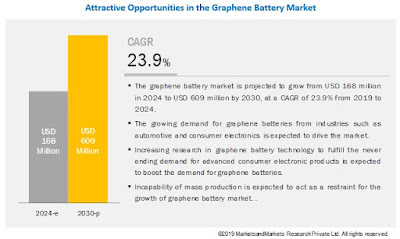
The global graphene battery market size is projected to grow from USD 168 million in 2024 to USD 609 million by 2030, at a CAGR of 23.9% from 2024 to 2030. The increasing demand for graphene batteries in consumer electronics and automotive industries is expected to drive the graphene battery market.

Samsung SDI (South Korea), Huawei Technologies Co., Ltd. (China), Log 9 Materials Scientific Private Limited (India), Cabot Corporation (US), Grabat Graphenano Energy (Spain), Nanotech Energy (US), Nanotek Instruments, Inc. (US), XG Sciences, Inc. (US), ZEN Graphene Solutions Ltd. (Canada), Graphene NanoChem (Malaysia), Global Graphene Group (US), Vorbeck Materials Corp. (US), Graphenea Group (Spain), Hybrid Kinetic Group Ltd. (Hong Kong) and Targray Group (Canada) are some of the leading players operating in the graphene battery market. These players have adopted the strategies of expansion and joint-venture to enhance their position in the graphene battery industry.

To know about the assumptions considered for the study download the pdf brochure

In line with the rising demand for graphene batteries, in December 2018, Log 9 Materials Scientific Private Limited (India) announced that they are working on graphene-based metal-air batteries. The metal-air battery uses metal as the anode, oxygen as the cathode, and water as an electrolyte. A graphene rod is used in the air cathode of the battery. Since oxygen has to be used as the cathode, the cathode material has to be porous to let the air pass, a property in which graphene excels. According to Log 9 Materials, the graphene used in the electrode can increase the battery efficiency by five times at one-third the cost.

In November 2017, Samsung SDI (South Korea), in collaboration with Samsung Advanced Institute of Technology (SAIT), developed a unique “graphene ball” that could make lithium-ion batteries last longer and charge faster. Samsung Advanced Institute of Technology (SAIT) said that using the new graphene ball material to make batteries will increase their capacity by 45% and make their charging speed five times faster. It was also said that this battery would be able to maintain a temperature of 60 degrees Celsius that is required for use in electric cars.

In December 2016, Huawei unveiled new graphene- Li-Ion battery with abilities to withstand high temperature (60° degrees as opposed to the existing 50° limit). The lifespan of the graphene-Li-Ion battery will also be twice that of the ordinary Li-ion battery. To achieve this breakthrough, Huawei incorporated three new technologies including a special additive in the electrolyte, cathodes with modified large-crystal NMC materials, and graphene for more efficient cooling.

In June 2014, Vorbeck Materials Corp. (US) launched Vor-Power, a lightweight, flexible battery strap that can be attached to any existing bag strap to enable a mobile charging station that provides about 50 hours of additional talk or surf time. The product weighs 450 grams, provides 7,200 mAh, and is probably the world’s first graphene battery.

Inquiry Before Buying: https://www.marketsandmarkets.com/Enquiry_Before_BuyingNew.asp?id=96975481

Thursday, 10 March 2022

Ontex (Belgium) & Kao Corporation (Japan) are the Leading Players in the Feminine Hygiene Products Market


The global feminine hygiene products market size is projected to grow from USD 20.9 billion in 2020 to USD 27.7 billion by 2025, at a CAGR of 5.8% during the forecast period 2020 to 2025. The growth can be attributed to the increasing female population and rapid urbanization.

Asia Pacific accounted for the largest share of the feminine hygiene products market in 2019. The countries considered for study in the Asia Pacific feminine hygiene products market include China, India, Japan, Indonesia, Malaysia, and Thailand. Growing disposable income, rapid urbanization, and awareness about menstrual hygiene management are driving the feminine hygiene products market in this region. Recently, the Indian government announced plans to invest USD 160 million in the Suvidha initiative, a scheme to ensure proper access to sanitary napkins in rural areas of the country. The government plans to provide biodegradable sanitary napkins to the masses at the cost of USD0.00014 through this scheme. The government plans to involve high net worth individuals (HNIs) and corporates to assist in distributing sanitary napkins to underprivileged women across the country. These developments will further boost the demand for feminine hygiene products.

To know about the assumptions considered for the study download the pdf brochure

Johnson & Johnson (US), Procter & Gamble (US), Kimberly-Clark (US), Essity Aktiebolag (publ) (Sweden), Kao Corporation (Japan), Daio Paper Corporation (Japan), Unicharm Corporation (Japan), Ontex (Belgium), Hengan International Group Company Ltd. (China), and Drylock Technologies (Belgium) are some of the leading players operating in the feminine hygiene products market. These players have adopted the strategies of acquisitions, expansion, and product launches to enhance their position in the market.

In May 2020, Ontex announced plans for new personal hygiene manufacturing plant in Rockingham County, North Carolina, US. The new facility is scheduled to start production from mid-2021. The company has a presence in 21 countries, and it has 19 manufacturing sites in 15 countries in Europe, Russia, the Middle East, Africa, Pakistan, Australia, and the Americas. It also has around 30 sales and marketing offices and nine dedicated R&D centers.

Kao Corporation entered into a partnership with the United Nations Population Fund in February 2019 to support the Menstrual Hygiene Improvement Project in Uganda. Kao is providing funds to EcoSmart Uganda Ltd., a start-up company founded by five young social entrepreneurs in Uganda, to domestically produce sanitary napkins. Kao Corporation operates its feminine hygiene business through the human health care segment. The company has sales and distribution facilities across Japan and other countries. It has a portfolio of over 20 leading brands.

Read More: https://www.marketsandmarkets.com/PressReleases/feminine-hygiene-product.asp

Epoxy Adhesives Market worth $9.6 billion by 2024


The global epoxy adhesives market size is projected to grow from USD 7.2 billion in 2019 to USD 9.6 billion by 2024, at a CAGR of 6.0%.

Increasing urbanization and growing usage of composites, plastics, and other higher strength metals in the construction industry is driving the global epoxy adhesives market. Epoxy adhesives offer the ability to adhere strongly, with exceptional mechanical & electrical insulating properties and chemical and heat resistance.

Early buyers will receive 10% customization on reports: https://www.marketsandmarkets.com/requestCustomizationNew.asp?id=142980020

One-component type is expected to withess the highest growth during the forecast period.

The one-component based epoxy adhesives market is estimated to grow at the highest CAGR from 2019 to 2024, in terms of volume. The excellent properties of the one-component type adhesives such as, quick curing time, a solvent-less system, and consumer friendly usage, is driving the demand in this segment.

Building & construction is projected to be the largest end user of epoxy adhesives.

The building & construction industry accounted for the largest share of the overall epoxy ahdesives market, in terms of volume, followed by the automotive industry. The building & construction industry started using epoxy adhesives with the increasing usage of composites, plastics, and other higher strength metals. Growing urbanization is fueling the growth of the construction sector, which is driving the epoxy adhesives market.

Epoxy adhesives market in APAC is projected to witness the highest CAGR during the forecast period.

APAC is projected to be the fastest-growing epoxy adhesives market during the forecast period. China is the largest market for epoxy adhesives in the region. However, India and Thailand are the fastest-growing markets for epoxy adhesives in the region. Owing to increased government investments in developing countries for infrastructure, such as public utilities, commercial, and entertainment structures, and housing demands to cater to the steadily-growing population, the demand for epoxy adhesives in this region is expected to growth significantly.

The major players in the epoxy adhesives market include Henkel AG (Germany), Sika AG (Switzerland), 3M Company (US), H.B. Fuller (US), DuPont (US), Illinois Tool Works Incorporation (US), Ashland (US), RPM International (US), Lord Corporation (US), and Huntsman Corporation (US).

Request for Sample Report: https://www.marketsandmarkets.com/requestsampleNew.asp?id=142980020

Top Market Leaders in Lithium-Ion Battery Anode Market


The global lithium-ion battery anode market size is projected to grow from USD 8.4 billion in 2021 to USD 21.0 billion by 2026, at a CAGR of 19.9% from 2021 to 2026. Factors such as strict government mandates on fuel economy, rising concerns related to environmental issues, which include greenhouse gas and an increase in R&D initiatives are expected to drive the growth of the market.

Europe is the second-largest consumer of lithium-ion battery anode and accounted for a share of 6.1% of the global market, in terms of value, in 2020. The region is home to some of the largest battery manufacturers, such as Saft (France) and FIAMM (Italy). Batteries have major applications as clean, sustainable, and compact sources of power in automotive. The region is witnessing significant growth in the demand for EVs which is largely dependent on government incentives and funds. Growth in demand for electric vehicle has increased the demand for lithium-ion battery anode which in return has fueled the demand for lithium-ion battery anode in the region.

To know about the assumptions considered for the study download the pdf brochure

Some of the key players in the lithium-ion battery anode market include Showa Denko Materials (Japan), JFE Chemical Corporation (Japan), Kureha Corporation (Japan), SGL Carbon (Germany), Shanshan Technology (China), and POSCO CHEMICAL (South Korea). The lithium-ion battery anode market report analyzes the key growth strategies adopted by the leading market players between 2017 and 2021, which include expansions, investments, and mergers & acquisitions.

Showa Denko Materials is one of the leading companies engaged in the manufacturing of lithium-ion battery materials. The company manufactures a wide range of chemicals and electronics related products. In April 2021, Showa Denko Materials established a local production for graphite electrodes in Southeast Asia and Europe. This will help the company to strengthen its supply chain and geographical presence.

Another player in the lithium-ion battery anode market is SGL Carbon. The company is among the leading manufacturers of specialty graphite and composite materials. In April 2021, SGL Carbon signed a collaboration agreement with Altech Chemicals for the development of high purity alumina-coated (HPA) graphite materials for use by the lithium-ion battery industry in anode application.

Inquiry Before Buying: https://www.marketsandmarkets.com/Enquiry_Before_BuyingNew.asp?id=147095907

Non-Biodegradable Plastics to Lead Bioplastics & Biopolymers Market During Forecast Period

In recent years, there has been a growing awareness that the use of non-biodegradable plastics is leading to large amounts of plastic waste ...